
Some months you’re buried in showings, listing prep, and follow-ups. Then a quiet stretch hits, and you realize your pipeline depended too much on referrals, random DMs, or whoever happened to remember your name that week.
That pattern wears agents out. It also makes marketing feel like one more job you never fully catch up on.
A real estate lead magnet creator can fix that, but not in the way commonly assumed. It’s not just Canva, a PDF template, or a landing page builder. It’s a complete system for giving prospects a useful next step, capturing their contact information, and moving them into a follow-up process while you’re handling the rest of your business. Speed matters here. According to the NAR 2025 Home Buyers and Sellers Generational Trends Report summary, 78% of homebuyers ultimately work with the first real estate agent who responds to their inquiry. If your marketing doesn’t help you capture and organize intent quickly, you’re already behind.
Table of Contents
- The End of Inconsistent Lead Generation
- What a Lead Magnet Creator Actually Is
- Key Features of an Effective Lead Magnet System
- A 4-Step Workflow to Create Your Own Lead Magnet
- Lead Magnet Examples That Attract Buyers and Sellers
- The Faster Path A Done-For-You Solution
The End of Inconsistent Lead Generation
Inconsistent lead flow usually isn’t a talent problem. It’s a systems problem.
Most agents don’t lack knowledge. They lack a reliable way to package that knowledge into something useful for buyers and sellers before those people are ready to call. When your marketing depends on occasional posting, sporadic email sends, or last-minute ideas, your pipeline will stay uneven.
Why random marketing keeps failing
A lot of agents market in bursts. You post heavily when business feels slow. Then client work picks up, marketing disappears, and your future pipeline dries up again.
That cycle creates two problems:
- You stay reactive: You wait for inquiries instead of creating reasons for people to raise their hand.
- You lose warm prospects: People may like your content, but if there’s no clear offer, they scroll away and forget you.
Practical rule: If your content doesn’t lead to a next step, it’s awareness content, not lead generation.
A lead magnet system changes the job of your marketing. Instead of trying to close strangers from a social post, you offer something specific and useful: a seller prep guide, a neighborhood report, a home valuation request, a relocation checklist. That exchange gives prospects a low-pressure way to engage.
What predictability actually looks like
Predictable lead generation doesn’t mean every week looks identical. It means you’ve built a repeatable process:
- Pick one real client problem
- Create one focused resource
- Attach a simple opt-in
- Promote it repeatedly across channels
- Follow up fast and consistently
That’s what a real estate lead magnet creator should help you do.
Busy agents often think the issue is volume. Usually it’s consistency. A few well-matched offers used over and over will outperform a pile of half-finished ideas sitting in drafts.
The agents who build steadier pipelines usually aren’t louder. They’re easier to say yes to.
What a Lead Magnet Creator Actually Is
A lead magnet creator isn’t just a design app. It’s the combination of offer, asset, page, form, and follow-up that turns attention into an inquiry you can act on.

A lead magnet operates like a digital handshake. A prospect lands on your content because they have a question, concern, or timeline in mind. You offer something that helps them right now. In return, they share just enough information for you to continue the conversation.
It’s a value exchange, not a design exercise
Many agents get stuck. They spend too much time choosing fonts, tweaking colors, or making a guide look polished, while ignoring the part that matters most: whether the offer solves a real problem.
A strong lead magnet usually does one of these jobs well:
- Reduces uncertainty: first-time buyer checklists, closing process guides, moving timelines
- Answers “what’s my next move?” seller prep guides, staging checklists, pricing prep resources
- Delivers local insight: neighborhood reports, school-area summaries, market snapshots
- Creates immediate curiosity: home valuation tools, equity check offers, local market update signups
The design still matters. It affects trust. But pretty without relevance won’t convert the right people.
The real components behind the term
When people search for a real estate lead magnet creator, they often expect one tool. In practice, it’s usually several parts working together:
| Component | What it does |
|---|---|
| Content tool | Helps you write or structure the guide, checklist, or report |
| Design tool | Turns it into a branded asset prospects will actually read |
| Landing page | Gives the offer its own focused destination |
| Form | Collects contact and qualification details |
| Delivery method | Sends the asset automatically after opt-in |
| Follow-up system | Moves the lead from download to conversation |
This is why DIY setups become messy fast. You might use Canva for the PDF, a website builder for the page, Mailchimp or another email tool for delivery, and your CRM for follow-up. None of that is wrong. It just means the “creator” is really a workflow.
A good lead magnet doesn’t ask for trust upfront. It earns a little trust first, then opens the door to a conversation.
If you keep that in mind, your decisions get easier. The goal isn’t to publish more stuff. The goal is to give buyers and sellers one clear reason to engage.
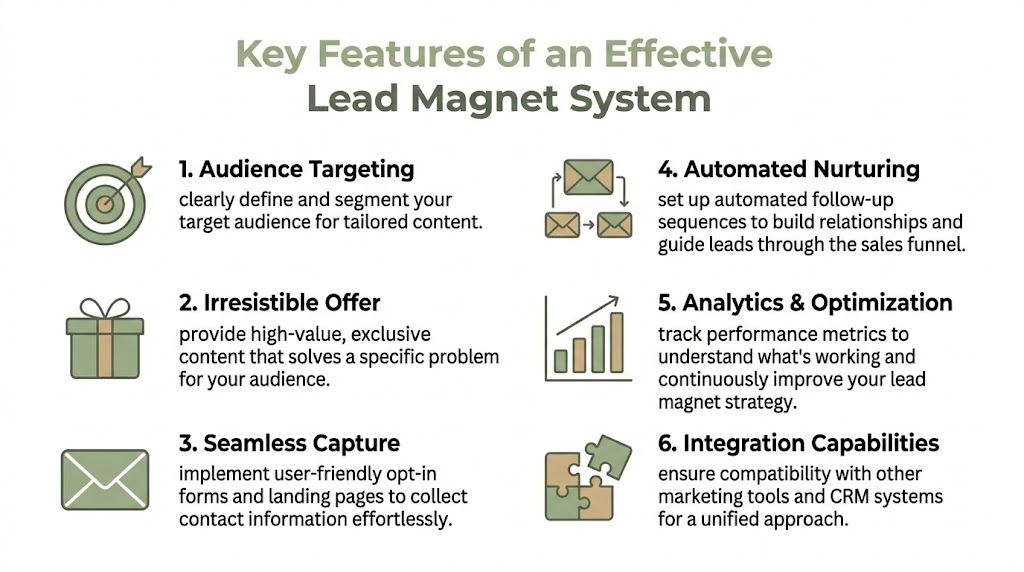
Key Features of an Effective Lead Magnet System
Most agents don’t need more software. They need fewer moving parts.
A workable system has to do more than help you create a file. It has to help you launch the offer, capture the lead, and keep the process repeatable. That’s the difference between a one-off marketing task and a lead engine you can use every month.
The non-negotiables
An effective lead magnet system should include these pieces:
- Template variety: You need offers for different situations, not one generic buyer guide for everyone.
- Easy brand edits: Your logo, colors, contact details, and voice should be simple to update without a designer.
- Landing page integration: The offer and the opt-in should live together, which is why dedicated real estate landing page templates matter.
- Simple forms: The form should qualify without creating unnecessary friction.
- Automated delivery: If someone opts in at night or on a weekend, the asset should still arrive immediately.
- Basic reporting: You should know which offer gets downloads, which page gets ignored, and which leads look promising.
The missing piece in many DIY setups is the middle. Agents create the PDF, then never finish the page, the form, or the follow-up.
Why automation matters more than polish
According to the Homes for Heroes lead magnet article, lead magnets can operate continuously with “minimal effort or cost” while providing “great ROI,” but that only happens when backend automation and repeatable production are in place. That’s an operational point, not a design point.
If someone downloads your relocation guide and hears nothing from you until two days later, the asset didn’t fail. The system did.
A good system also supports reuse. One neighborhood guide can become:
- A landing page offer
- An Instagram carousel topic
- A Reel talking point
- An email subject
- A blog content upgrade
That reuse is how agents save time without disappearing from marketing for weeks at a time.
If your lead magnet takes days to build and only gets used once, it’s a project. If it can be reused across channels, it becomes infrastructure.
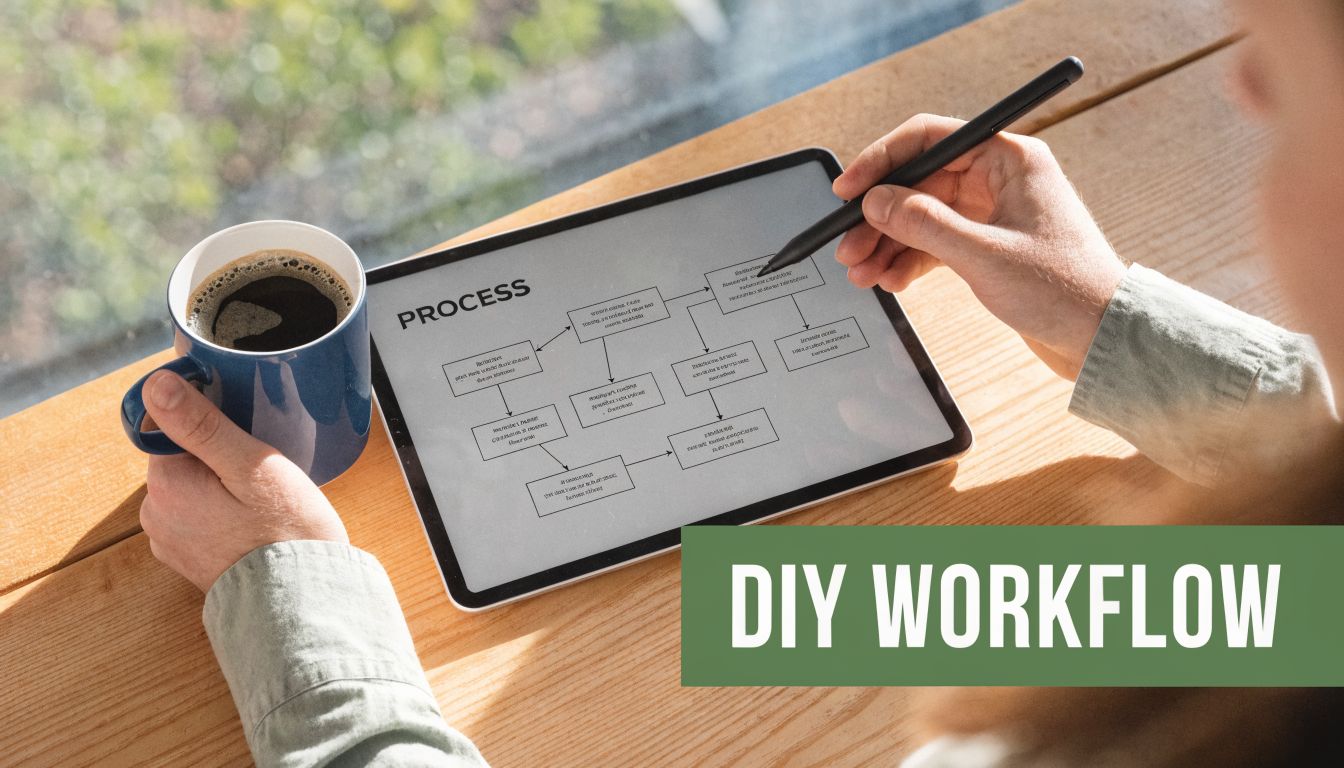
A 4-Step Workflow to Create Your Own Lead Magnet
DIY can work. It just takes more coordination than most agents expect.
The challenge isn’t creating a PDF. The challenge is turning one idea into something people want, making it easy to claim, and then promoting it enough times that it produces leads.
Start with the client problem
Step one is choosing a problem that shows real intent.
Good examples include a homeowner wondering whether to sell now or wait, a buyer trying to understand neighborhoods, or a relocating family wanting a simple area guide. Weak lead magnets stay broad. Strong ones answer a specific question for a specific person.
Use this filter before you create anything:
- Is the problem urgent enough to matter now?
- Would someone exchange contact info to solve it?
- Does this connect naturally to your services?
A generic “Everything You Need to Know About Real Estate” guide usually won’t help. A “Pre-Listing Checklist for Busy Homeowners in [Your Area]” is much tighter and easier to promote.
Build the asset and capture path
Step two is the asset itself. Canva is often enough for checklists, guides, mini reports, or seller prep sheets. If you’re using data-heavy content, keep it skimmable. Prospects don’t want a dissertation. They want clarity.
Step three is the page and form. At this stage, many conversions are won or lost. According to the LeadCapture guidance on real estate lead magnet forms, form design matters because each additional form field reduces conversion rates, so you should only ask for essential qualifying information upfront, such as a prospect’s buying or selling timeframe.
That usually means starting with a short form and gathering more context later.
- Ask for essentials first: name, email, and one useful qualifier
- Use a focused headline: the page should promote one offer, not your whole business
- Keep the form on the same page: fewer clicks usually means less drop-off
Here’s a practical walkthrough of the process in action:
Don’t stop at publish
Step four is promotion. During this step, most DIY lead magnets stall out.
You need more than one caption and one story slide. Plan several angles around the same offer. A home valuation magnet can be promoted through market update posts, equity education, seller prep content, and local pricing conversations. A relocation guide can be tied to school areas, commute questions, neighborhood videos, and moving checklists.
Field note: Promotion gets easier when the lead magnet sits underneath your regular content instead of requiring its own campaign every time.
If you’re building your own system, block time for all four steps. Otherwise you’ll finish the guide and never launch the engine around it.
Lead Magnet Examples That Attract Buyers and Sellers
The best lead magnets don’t try to attract everyone. They attract the right person at the right stage.
That matters even more if you’re watching your budget closely. A 2026 survey of over 50,000 real estate professionals found that 63.7% of realtors allocate under $1,000 per month to marketing, which is why targeted offers usually beat broad awareness plays for lean teams.
For more inspiration, this roundup of buyer and seller lead magnet ideas is useful because it shows how different offers match different client situations.
For sellers who are thinking but not ready
A seller staging guide works well for homeowners who aren’t prepared to book a listing appointment yet. They’re curious, maybe a little hesitant, and trying to estimate the amount of work involved before they commit.
A home valuation offer catches a different kind of seller. This person wants a fast signal about equity, timing, or pricing expectations. The attraction here is immediacy. They may not be transaction-ready today, but they’ve moved beyond casual browsing.
For buyers who need clarity
A first-time homebuyer roadmap helps clients who feel overwhelmed by the process. They don’t just need listings. They need order. A checklist or timeline lowers anxiety and makes you look organized before you ever speak.
A neighborhood market report draws buyers who already know they want a specific area. These leads can be strong because the search is more defined. They’re not asking whether they want to buy somewhere. They’re trying to decide where and when.
Buyers often download guides for confidence. Sellers often request resources for timing. The psychology is different, so the offer should be different too.
For local authority and repeat visibility
A relocation guide is useful if your market gets incoming buyers. It works because it combines local knowledge with practical planning. You’re not just sharing listings. You’re helping someone picture life in the area.
A seasonal homeowner checklist can also work well, especially for nurturing people who aren’t ready now but want to stay connected to a local expert. This type of magnet may not produce immediate conversations at the same pace as valuation offers, but it can keep your brand in front of the right households.
The point isn’t to create all of these at once. Choose the one that matches the audience you most want more of.
The Faster Path A Done-For-You Solution
Most agents can build a lead magnet system. The key question is whether they’ll keep doing it month after month.
That’s where DIY usually breaks down. Not because the tools are bad, but because the workload spreads across too many tasks: writing, designing, setting up pages, checking forms, drafting captions, posting consistently, and following up on time.

Where DIY breaks down
The DIY route makes sense if you enjoy building systems and have the time to maintain them. Many agents don’t.
That’s why done-for-you options exist. One example is Restate Social’s done-for-you marketing approach, which packages monthly lead magnets with landing pages and supporting marketing assets. The operational appeal is straightforward. It removes the setup burden that often stalls execution. It also addresses a documented workflow gap. A source discussing this challenge notes that Restate Social directly solves the operational challenge of creating hyper-local lead magnets at scale without design expertise for agents who need neighborhood-specific content but don’t have time to build it manually, as described in this video reference about the hyper-local content gap.
The broader trade-off is simple. DIY gives you full control but demands steady production discipline. Done-for-you reduces control at the micro level, but makes consistency much easier.
DIY Lead Magnet Creation vs. The Restate Social Method
| Aspect | DIY Method | Restate Social Method |
|---|---|---|
| Strategy | You choose topics from scratch | Monthly lead magnet included in a broader content system |
| Design | You build in Canva or hire help | Pre-designed templates are provided |
| Landing page | You create and connect it yourself | Matching landing pages are included |
| Promotion | You write captions and emails manually | Supporting content is already prepared |
| Consistency | Depends on your schedule | Runs on a recurring monthly delivery model |
| Time load | Higher ongoing setup and production work | Lower production burden for the agent |
If you’re constantly rebuilding your marketing from zero, you don’t have a lead generation system yet. You have a series of unfinished campaigns.
This is the practical decision. If you want full custom control and don’t mind the build time, DIY is viable. If your bigger problem is consistency, a done-for-you system is usually the cleaner fit.
The most effective setup is the one you’ll use while serving clients.
If you want a simpler way to stay visible and keep lead generation moving without building every asset yourself, take a look at Restate Social. It gives real estate agents a monthly marketing system that includes lead magnets, landing pages, and ready-to-use content so you can spend less time creating and more time following up with people who are ready to talk.